
In laser manufacturing, a control-system limitation can appear as inconsistent contour quality, excessive cycle time, difficult commissioning, or unstable operation under demanding motion conditions. These problems are not always caused by the controller itself. Mechanical rigidity, servo tuning, network configuration, laser response, and software design can all contribute. A structured performance evaluation helps identify the actual constraints before the machine reaches production.
Acceleration and jerk influence how quickly a machine changes its velocity and acceleration. Higher values can reduce cycle time for some paths, but they can also increase mechanical stress, excite structural resonances, and worsen tracking performance if the system is not designed for them. Lower values may improve smoothness but extend the processing time. The appropriate settings depend on machine mass, transmission design, servo capacity, and the geometry of the programmed path.
A shorter communication cycle or higher nominal axis speed is valuable only when the rest of the system can use that capability. Mechanical design, feedback quality, process timing, software configuration, and safety engineering remain essential to the final result. By defining application requirements first and validating the complete system before production, equipment developers can reduce integration uncertainty and build a more maintainable laser-processing platform.
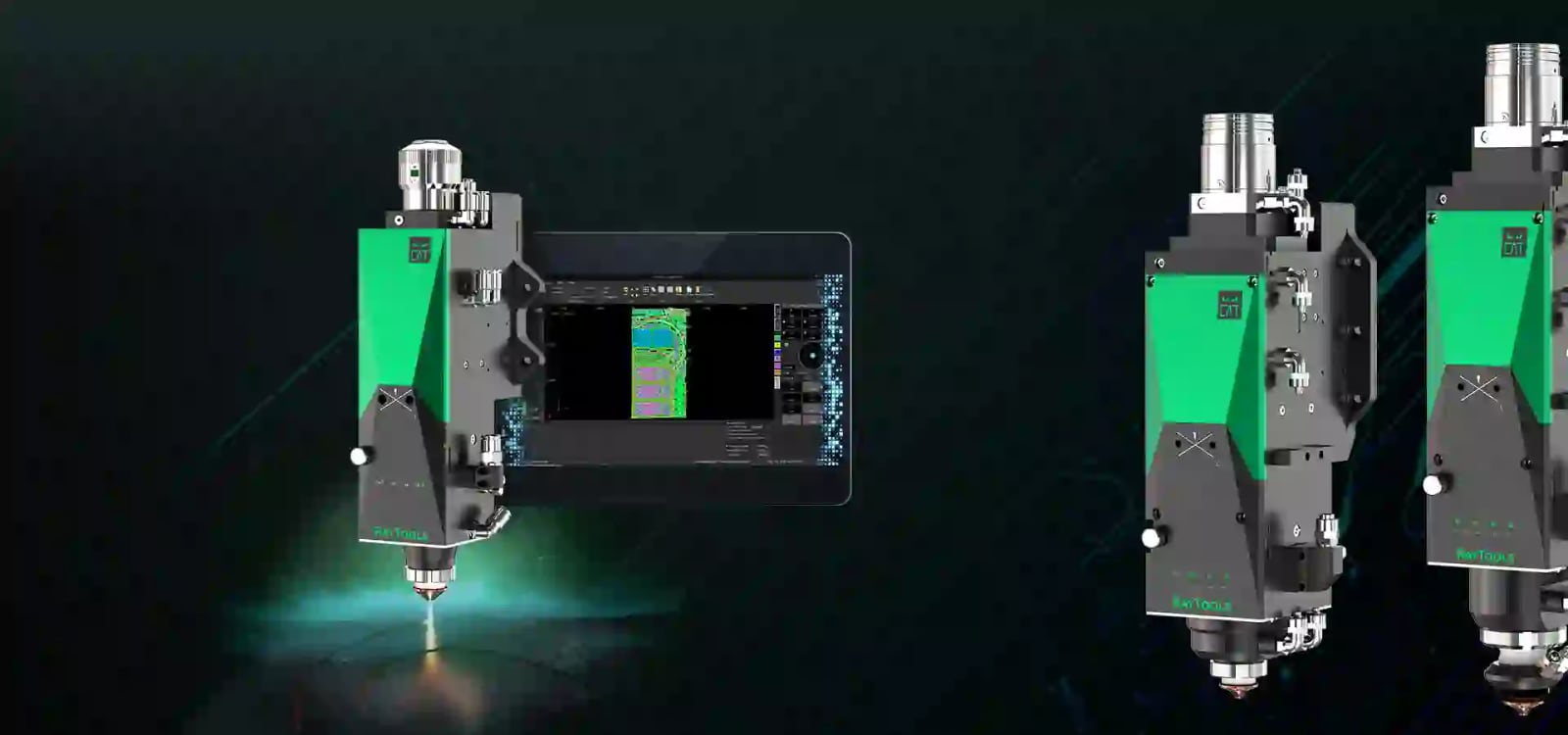
RayTools focuses on intelligent laser manufacturing, covering applications such as cutting, drilling, welding, cladding, hardening, surface treatment, micro-machining, online marking, and additive manufacturing. Each application places different demands on motion control. Precision micro-machining may emphasize fine path execution, while large-scale automation may require coordinated motion over a larger working envelope and integration with material handling.
Synchronization is especially important when multiple axes must follow a coordinated path. If their command and feedback updates are not aligned appropriately, the resulting motion may deviate from the intended trajectory. In laser processing, this deviation can affect path accuracy and the timing of process events. The control architecture should therefore provide synchronization behavior appropriate to the selected drives and the required motion mode.
The relevant question is therefore not simply how fast the XC3000S can command an axis to move. It is whether the controller can execute the target path with acceptable contour deviation and cycle time under realistic machine conditions. Test patterns should include straight lines, circles, corners, curves, and representative production geometry. Where possible, compare commanded paths with measured results rather than relying only on visual inspection.
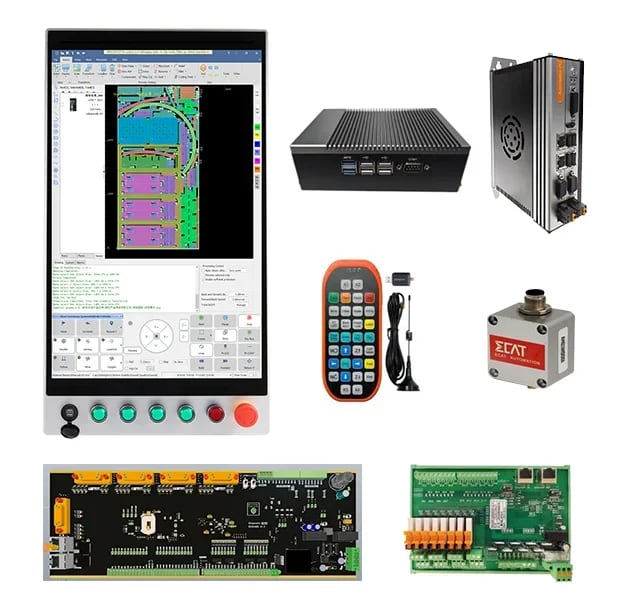
Choosing an XC3000S EtherCAT motion controller for an automated laser machine requires more than checking whether it supports industrial Ethernet. The controller must fit the intended axis configuration, motion profile, servo system, process synchronization requirements, and production environment. Its practical value depends on how effectively it coordinates the complete machine, from trajectory generation to drive feedback and process execution.
Following error is a useful diagnostic measurement because it indicates the difference between commanded and measured motion. If it increases significantly during acceleration, cornering, or reversal, the cause may involve excessive dynamic demands, an unsuitable servo configuration, mechanical friction, or insufficient system stiffness. Increasing controller update frequency without diagnosing these factors may not solve the problem.
Axis planning should also account for future expansion. Additional axes may be needed when a machine adds rotary positioning, automatic focusing, or a material-handling module. However, expanding the architecture is not simply a matter of adding more EtherCAT devices. The controller's supported configuration, task scheduling, communication load, and application software must all accommodate the additional functions.
For example, a two-axis laser marking platform may mainly require precise X-Y movement and position-related laser control. A five-axis processing system may require coordinated movement across several axes with a more demanding trajectory-planning problem. A controller that supports a sufficient number of physical axes may still be unsuitable if its interpolation functions do not match the required motion strategy.
官网:https://www.raytools.com/xc3000s-ethercat-motion-controller-how-to-evaluate-system-performance.html
资料来源:企业官网公司介绍页面(复核日期:2026-10-29)。